
The Need for Planning to Converge with Delivery
The Union Budget’s emphasis on artificial intelligence, digital learning and future-skills shows a clear policy shift toward workforce readiness. But policy only succeeds when access matches ambition. For the youth, the barriers are not merely about curriculum, they are about access. For example, training providers are sparse, career guidance is inconsistent, and the opportunity cost of long training programs is prohibitive. Therefore, turning national budget plans into real local opportunities requires changing how training is delivered.
Across India, organizations like NIIT Foundation demonstrate how decentralized delivery can make workforce policy tangible. Through NIIT Foundation student programs, community-based skilling, and NIIT Foundation digital literacy initiatives, delivery architecture becomes the bridge between macro policy and micro opportunity.
The Rural Access Gap as a Governance Problem
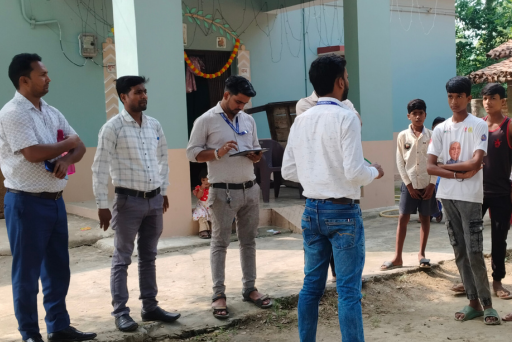
Rural youth are not excluded because of lack of policy intent, but because of gaps in last-mile delivery. When investments remain concentrated in urban institutes or long-duration campus models, participation and outcomes become geographically unequal by default. The policy imperative, therefore, is to treat access as a core design parameter rather than a secondary concern. Training delivered through community centres, local schools, and short flexible courses, such as skill development initiatives and rural financial inclusion programs, can reduce travel costs and make learning more practical. The goal is not to lower standards, but to deliver them in ways that work where learners live.
The National Skills Qualifications Framework (NSQF) offers institutional guidance. By mapping short, stackable modules to NSQF levels, policymakers can create incremental trajectories that are portable and employer appropriate. The policy imperative is to ensure that modular delivery formats, in the form of short courses, micro credentials and apprenticeships, are default modes in rural-facing programs. This allows learners to accumulate competencies over time, balancing immediate earning needs with longer-term career mobility.
Career Development Centres as Life-Skill Hubs
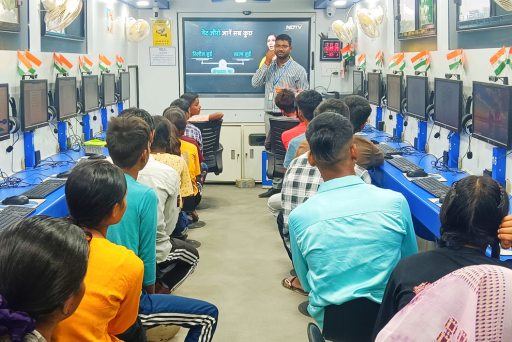
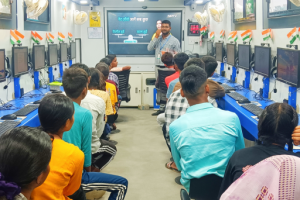
Career Development Centres (CDCs) are the practical intermediaries that translate policy into placement. When CDCs combine outreach, diagnostic assessment, multilingual pedagogy, short modular courses and act as employer liaisons, they become trusted channels for rural employability.
Complementing CDCs, school digitalization and life skills programs can potentially create sustained exposure to digital tools and work readiness from an early age, thereby reducing the age at which learners enter the skilling pipeline. NIIT Foundation’s portfolio of CDC operations, school digitalization, life skills coaching and financial literacy programs illustrates for underserved communities how layered local institutions can produce continuous learning pathways rather than isolated interventions.
Using AI to Develop Practical Career Pathways
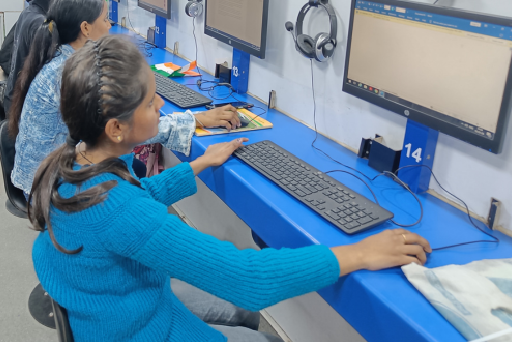
The AI economy is not limited to advanced technical jobs. Many roles today require working with digital tools rather than building them. NIIT Foundation’s skilling programs already reflect this reality by focusing on step-by-step progression. Learners typically begin with basic digital literacy, communication skills, and workplace behavior through community-based training and Career Development Centres. They then move to job-oriented modules such as data entry, customer service support, e-commerce operations, and introductory IT–ITeS skills delivered in rural and semi-rural areas.
With this foundation, learners can gradually take on more advanced digital tasks such as structured data handling, quality checks, and other platform-based work that supports AI systems. When training is connected to local industries, such as agriculture supply chains, regional retail, or small businesses, learners can start earning while continuing to build skills.
Policy as an Enabling Tool
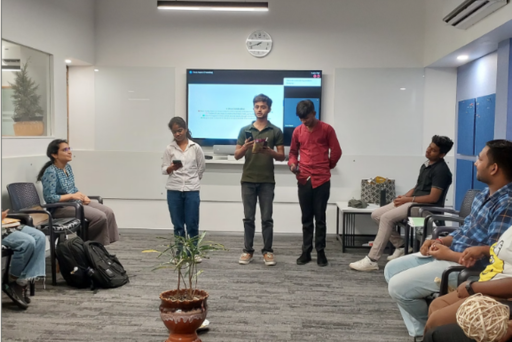
Community based programs show that five elements consistently improve outcomes: clear intake and career counselling, short courses aligned with NSQF levels, teaching in local languages, partnerships with employers, and support after placement. To scale such models, policy must focus on delivery quality as much as funding. This can include allocating part of skilling budgets to community-based pilots and encouraging employers to hire rural candidates through placement incentives or retention support.
Conclusion: Delivering Inclusion, Not Just Curricula
Budgetary ambition is necessary, but inadequate without delivery systems that make inclusion operational. When NSQF-aligned content is matched to community CDCs, school digitalization, life-skills training and employer-linked pathways, rural youth can meaningfully participate in the AI-enabled economy.
The policy test is simple: will national priorities be measured by the number of curricula revised, or by the number of lives transformed? Institutions that combine the goal of empowering communitieswith structured skilling pipelines demonstrate that inclusion is not aspirational, but operational when delivery is designed deliberately.