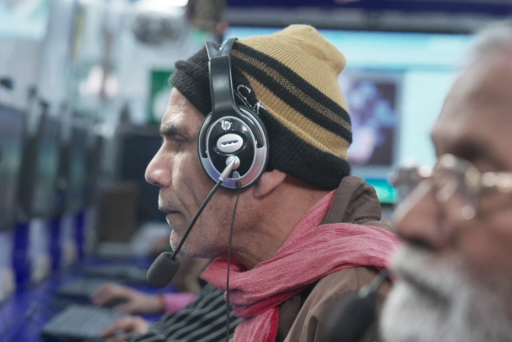
Cybersecurity Awareness in India: Why Digital Safety Is Now an Essential Life Skill

Cybersecurity Awareness in India Why Digital Safety Is Now an Essential Life Skill

India’s digital transformation has changed how people work, learn, communicate, access public services and manage money. From UPI payments and online banking to social media and app-based work, digital platforms are now part of everyday life. But greater digital access also brings greater exposure to cyber risks. Cybersecurity is no longer a concern limited to technology professionals—it is an essential life skill for every internet user.

A senior citizen making a digital payment, a farmer accessing an online government service, a small vendor accepting UPI, a gig worker using apps for work or a young person navigating social media can all face different forms of cyber risk. The methods may vary, but the consequences can include financial loss, identity theft, compromised accounts and misuse of personal information.

The Reserve Bank of India has repeatedly highlighted the importance of awareness around digital payment fraud. Common tactics include convincing users to share OTPs, PINs or passwords, clicking on malicious links, responding to fraudulent messages and downloading unsafe applications. [1] CERT-In has also warned that phishing remains a common form of online scam, with attackers often using trusted logos, urgent messages and fake websites to obtain sensitive information. [2]

This makes basic cybersecurity awareness as important as knowing how to use a digital service itself. Simple habits can significantly improve digital safety: verify links before clicking, never share OTPs or PINs, use strong and unique passwords, enable multi-factor authentication, keep devices and applications updated, and avoid downloading apps from untrusted sources. Users should also know how to report suspected cybercrime through India’s official cybercrime reporting mechanisms.

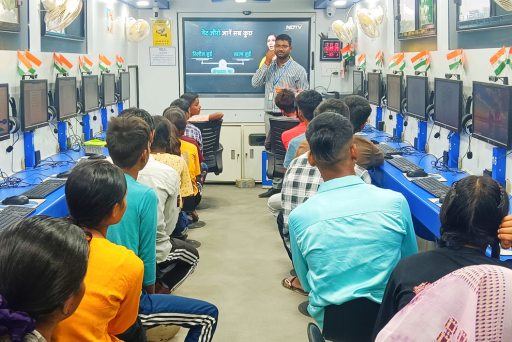
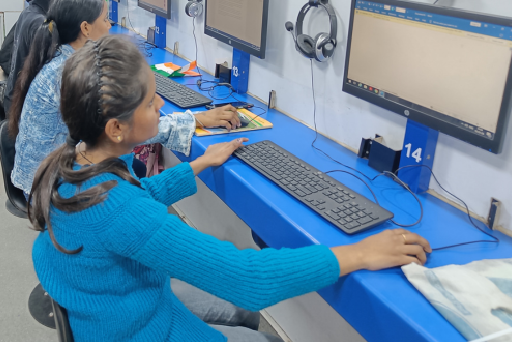
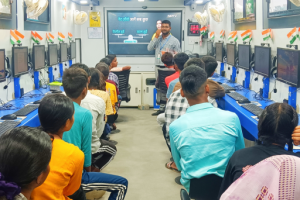
However, awareness must be accessible. Cybersecurity education should use simple language, practical examples and formats that people can understand regardless of their age, gender, location or level of digital experience. NIIT Foundation’s Cyber Safety initiative reflects this inclusive approach by combining cyber awareness with practical learning and making courses available across multiple Indian languages. [3]

Building a safer digital India therefore requires more than advanced technology. It requires digitally confident citizens who can recognise risks, question suspicious requests and make informed choices online.

Cybersecurity awareness is not simply about protecting devices or passwords. It is about protecting people, livelihoods, identities and opportunities. As India becomes increasingly digital, knowing how to stay safe online must become a basic life skill—accessible to everyone, everywhere.
According to most sources, Lorum Ipsum can be traced back to a text composed by Cicero in 45 BC. Allegedly, a Latin scholar established the origin of the text by compiling all the instances of the unusual word ‘consectetur’ he could find and eventually recognized it as a passage from ‘De finibus bonorum et malorum’ (On the extremes of Good and Evil) by Cicero, a book that was very popular in the Middle Ages: “Neque porro quisquam est, qui dolorem ipsum, quia dolor sit, amet, consectetur, adipisci velit… ” (Approximately: “Nor is there anyone who loves or pursues or desires to obtain pain of itself, because it is pain…”). A typical Lorem Ipsum text goes like this: “Lorem ipsum dolor sit amet, consectetur adipisici elit, sed eiusmod tempor incidunt ut labore et dolore magna aliqua. Ut enim ad minim …”.

It seems that only fragments of the original text remain in the Lorem Ipsum texts used today. One may speculate that over the course of time certain letters were added or deleted at various positions within the text. This might also explain why one can now find slightly different versions. Due to the age of the Lorem Ipsum text there are no copyright issues to contend with.

In the 1960s, the text suddenly became known beyond the professional circle of typesetters and layout designers when it was used for Letraset sheets (adhesive letters on transparent film, popular until the 1980s) Versions of the text were subsequently included in DTP programmes such as PageMaker etc.

The spread of computers and layout programmes thus made dummy text better known. While in earlier times several lines of the Lorem Ipsum text were repeated in the creation of dummy texts, today the full text of Cicero’s ‘De finibus’ serves as the basis for many dummy text or Lorem Ipsum generators. Based on ‘De finibus’, these generators automatically create longer sections of the Lorem Ipsum text or various other filler texts.

Share on facebook
Facebook
Share on google
Google+
Share on twitter
Twitter
Share on linkedin
LinkedIn
Share on email
Email

Impact Stories

Rajwant

Rajwant has seen a lot of struggle in his life and he... Read More

Panchdev

During a mobilization drive, NIIT Foundation team came... Read More

Archana

Archana is a homemaker living in Owala, Thane. She... Read More

Lopita

Lopita belongs to a middle class family settled in Balasore... Read More

Swati

Swati has always been very caring towards her family. She... Read More

Manju

Manju is born to a typical Brahmin family. Her... Read More

Facebook Feed

Social Media

Recent Posts