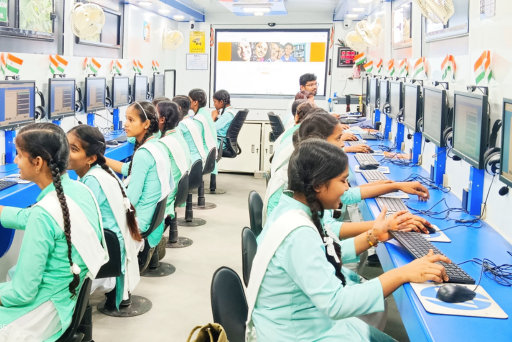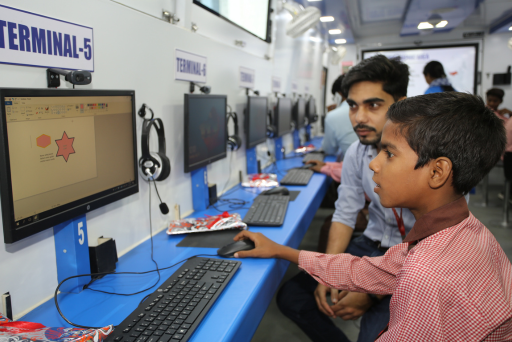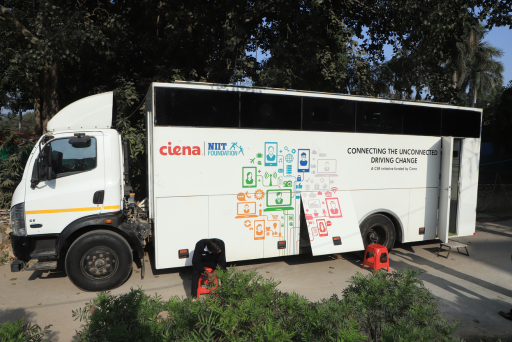
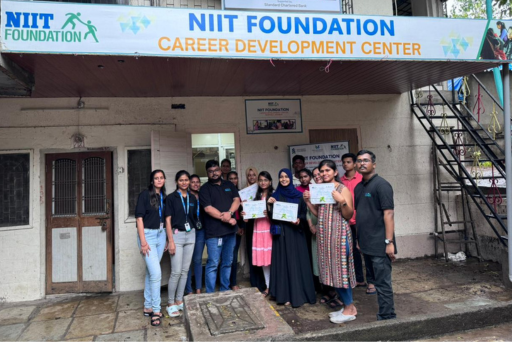
When Aditi Mehra first entered a Career Development Centre in Gangyal, Jammu, it was not lack of ambition that held them back. It was uncertainty. Computers felt unfamiliar. Technology felt distant. Artificial intelligence sounded abstract, even intimidating. Like many young people from urban settlements and Tier 3 towns, the hesitation was rooted in not knowing what these tools were, what they could do, or how they might help.
Global evidence increasingly shows that this fear of the unknown is one of the biggest barriers to digital participation. The UNESCO has repeatedly highlighted that confidence, not access alone, determines whether young people engage meaningfully with digital learning. When learners do not feel safe asking questions or experimenting, technology remains unused even when it is available.
NIIT Foundation’s Career Development Centres begin precisely at this point. Before skills, before assessments, before outcomes, the focus is on reassurance. Trainers and counsellors take time to explain what technology is, what it is not, and why curiosity matters more than perfection.
Learning to Explore Safely With AI
As AI-enabled tools are introduced at CDCs, the emphasis remains on safety and guided exploration. Learners are shown that AI is not something that breaks when used incorrectly. It is a tool designed to respond, adapt, and assist. Trainers demonstrate how asking simple questions leads to useful responses, and how refining those questions improves outcomes.
Students practise writing prompts, revisiting them, and learning through iteration. This process teaches an essential lesson. Learning is not linear. It is exploratory. AI becomes a patient partner in this journey, helping learners understand concepts without judgment or fatigue.
Importantly, human guidance stays central. Counsellors help learners interpret outputs and reflect on what they mean. This reinforces a key message. AI does not replace thinking. It strengthens it when learners engage thoughtfully.
This approach aligns with findings from the World Bank, which emphasise that digital tools are most effective when embedded within strong mentoring systems. Technology amplifies impact when human relationships remain intact.
Dignity, Family Support, and Changemaker Journeys
Beyond classrooms, CDCs work closely with families. Many caregivers are unsure about new forms of learning and worry about employability outcomes. Counselling sessions help families understand how personalised learning paths. When attendance dips or confidence falters, human intervention follows quickly. Learners are supported before they disengage fully. This proactive approach reflects global best practice. The International Labour Organization notes that early intervention is critical for retaining young people in skilling pathways, especially those from informal or vulnerable backgrounds.
Over time, transformation becomes visible. Learners who once hesitated begin experimenting confidently. Many go on to support peers, becoming informal mentors themselves. These Changemaker journeys are not about technology alone. They are about restoring dignity, belief, and aspiration.
At NIIT Foundation, humane skilling means preparing youth not just for jobs, but for lifelong learning. By reducing fear of the unknown and creating safe spaces for exploration, CDCs are helping young people reclaim confidence and imagine futures once thought unreachable.