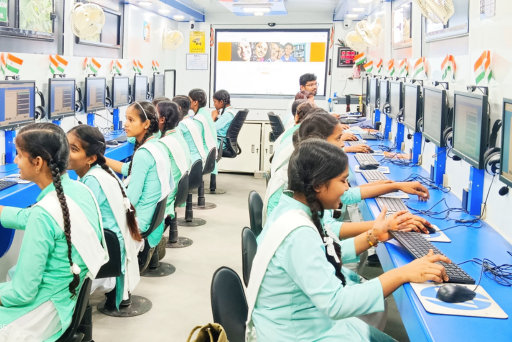
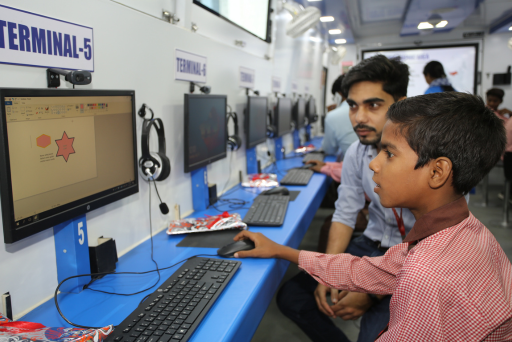
Digital transformation in education is no longer an abstract goal, it is an everyday reality unfolding across schools in India. The push for digital classrooms, accelerated by national and state education missions, has redefined how teachers engage with their students. Yet, as NIIT Foundation recognises, the effectiveness of digital learning depends not on infrastructure alone, but on the human capacity that animates it. The teacher, as the bridge between pedagogy and technology, determines whether a classroom becomes a space of real learning or simply one of digital display.
At the heart of NIIT Foundation’s school digitalisation model lies a singular belief: empowering teachers leads to empowered classrooms. Technology when aligned with a teacher’s instructional confidence and creativity, becomes a catalyst for critical thinking, collaboration, and deeper understanding among students.
Placing Teachers at the Centre of Digital Transformation
For decades, teachers have adapted to evolving tools, from blackboards to interactive boards, from textbooks to tablets. However, each new tool requires time, training, and trust. Without adequate support, even the most advanced digital infrastructure risks underuse.
NIIT Foundation’s teacher training ecosystem is designed to bridge this gap. Through a combination of capacity-building workshops, hands-on digital literacy sessions, and pedagogical integration support, teachers learn not only how to use technology, but why to use it. A key feature of this approach is its contextualisation; training modules are tailored to local curricula, languages, and classroom realities.
From Equipment to Engagement
Digital classrooms are often judged by the number of devices installed or the volume of content made available. NIIT Foundation’s experience shows that true impact goes deeper—into lesson design, learner engagement, and assessment practices.
Post-training observations indicate that teachers who gain confidence in digital tools experiment more creatively with teaching methods. They incorporate multimedia explanations, gamified quizzes, and interactive exercises that capture student attention and sustain interest. In classrooms supported by NIIT Foundation, technology transforms from an external aid into a seamless extension of pedagogy.
Continuous Mentorship and Impact Tracking
Empowerment is not a one-time deliverable, it is a sustained process. NIIT Foundation ensures that training does not end with a workshop. Teachers receive access to ongoing mentorship through digital teacher communities, peer learning circles, and periodic check-in sessions. These platforms help educators share experiences, troubleshoot barriers, and celebrate milestones.
Future-oriented digital readiness assessments help track individual and institutional progress. By combining quantitative metrics with qualitative reflections, allowing NIIT Foundation to continuously refine its approach, resulting in approx. 33,000 teachers across 82 districts trained, impacting nearly 48L students, since inception.
Toward the Classrooms of Tomorrow
India’s education system sits at a critical juncture where the digital divide can either widen inequality or bridge it. Teacher-led digital innovation is central to ensuring the latter. NIIT Foundation’s work across schools demonstrates how building teacher capacity in digital literacy creates ripple effects, improving classroom effectiveness, encouraging student curiosity, and ensuring inclusive access to quality education.
By continuing to invest in teachers as the architects of digital transformation, NIIT Foundation ensures that classrooms across India evolve not by technology alone, but through the people who use it with purpose and passion.