The Digital Bus as an AI Classroom: Reimagining Public Skilling for Rural India
A Policy Moment That Demands New Models for Delivery
India’s Union Budget has begun placing artificial intelligence, digital learning, and future ready skills at the center of its development agenda. The policy direction is clear: modernize skilling, expand digital access, and integrate AI into learning ecosystems. Yet the real measure of these commitments will lie in their reach beyond the big urban centres. For millions of rural learners, stable broadband, formal institutions, and structured career counseling remain inaccessible. If AI-led skilling is intended to be inclusive, delivery systems must be reimagined to be mobile, resilient, and community embedded.
Beyond Assumptions – Infrastructure as a Tool
National skilling frameworks often presume fixed infrastructure, in the form of colleges, training centres, and reliable internet connections. However, in many rural districts and isolated settlements, these conditions are simply not true. Broadband is sporadic, electricity is unreliable, and local training resources are limited. Without addressing this structural reality, even ambitious AI and future skills programs risk circumventing those they aim to serve.
Infrastructure resilience is therefore foundational to equitable skilling. An edge computing approach allows the Digital Bus to act as a localized server, hosting AI models and learning resources onboard. With periodic cloud synchronization, lessons and assessments continue regardless of connectivity. The system needs only intermittent broadband to sync progress to the cloud, effectively turning the bus into a self-sustaining “intelligence model” in environments with intermittent internet. This ensures uninterrupted personalized learning exactly where fixed infrastructure is absent.
Mobility in this context is not decorative but functional. Bringing the classroom into communities reduces travel costs, lowers participation barriers, and anchors learning in familiar spaces.
The Digital Bus – An AI-Enabled Learning Ecosystem
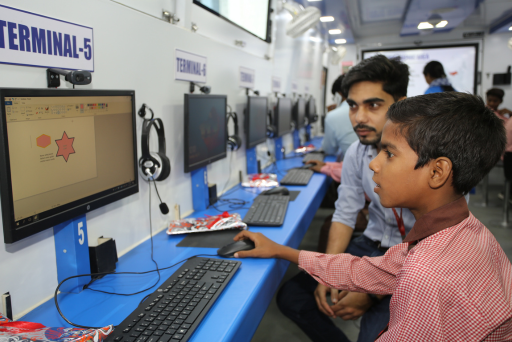
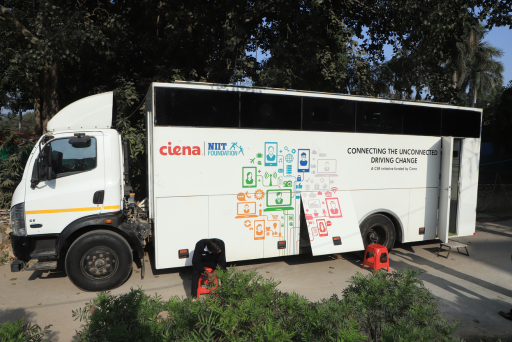
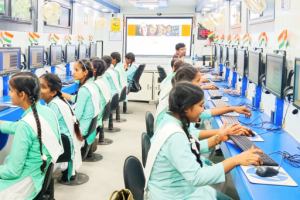
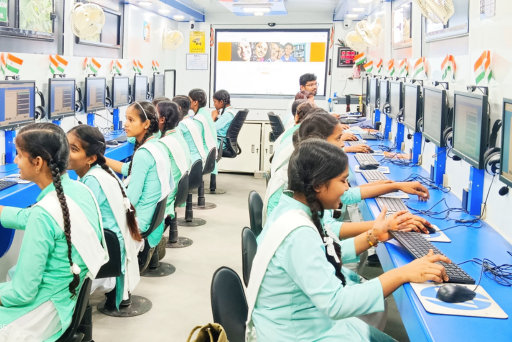
NIIT Foundation’s Digital Bus initiative is a proven model for mobile learning. These solar powered buses function as fully equipped classrooms, bringing digital literacy, IT courses and foundational skills to underserved regions directly. Each bus typically includes 16 to 20 computers, broadband connectivity, video conferencing facilities, e-learning software, and trained facilitators who deliver structured instruction and certification at the village doorstep. In addition to literacy and basic IT courses, the buses provide entrepreneurship programs, dissemination of government schemes, and community awareness sessions covering topics from women’s empowerment to financial tools.
This mobile ecosystem can leverage indigenous innovations such as Bhashini, India’s AI language translation initiative, to evolve into an AI-enabled classroom. Integrating multilingual AI tutors into the Digital Bus can dismantle the English language barrier that often gatekeeps technical learning.
Embedded AI can also power adaptive analysis, personalized learning paths, and real time feedback that assist facilitators to modify instructions. However, technology should augment and not replace the role of trained facilitators. Human mentorship remains crucial in building confidence and facilitating community trust around new technology.
From Foundational Skills to AI-Assisted Employment
The AI economy extends far beyond specialized engineering roles. Many entry level jobs in retail operations, logistics support, customer engagement, banking services, and digital platforms now involve interaction with AI enabled systems such as CRM interfaces, automated workflows, and structured analytics tools. These roles align with the practical competencies developed through NIIT Foundation’s programs. The Digital Bus brings digital literacy, basic IT skills and financial awareness directly into rural and underserved communities, creating a foundation for technology engagement.
Meanwhile, Career Development Centres and other Skilling Centres tailor training to local job opportunities, for example, data entry and e-commerce support in Haryana, retail roles in Rajasthan, and digital marketing in Assam, connecting basic digital fluency to real labor market demand. This staged, contextualized curriculum helps bridge the divide between introductory digital skills and the workplace systems that support entry-level employment. Foundational digital literacy can evolve into scenario-based simulations that mirror workplace tasks. Learners can practice customer communication, basic data handling, and digital coordination tasks that reflect entry-level employment expectations.
Sustainability and Scale
Scaling this vision requires structured institutional alignment rather than standalone pilots. NIIT Foundation already deploys its Digital Bus initiative through corporate CSR partnerships and collaborations with local administrations, demonstrating a functioning multi-stakeholder model. Formalizing this model within a Public-Private Partnership framework, where CSR investments unite with eligible public funding allocations, could support systematic expansion across remote districts.
Such integration would build on NIIT Foundation’s existing monitoring and reporting systems, which track enrolment, certification and placement outcomes. With incremental technological upgrades, each Digital Bus deployment could generate anonymized district level insights on digital literacy gains and employment. In doing so, the bus would remain a mobile classroom while also contributing data that updates evidence based rural skilling policy.
Equitable Ambition
India’s AI ambition is unquestionable. The more critical question lies in whether its benefits reach every learner, regardless of location or economic background. Mobility, multilingual AI integration, infrastructure flexibility, and employer aligned programs constitute a pragmatic pathway to close the rural access gap.
The ultimate success of India’s AI agenda will not be measured by technological sophistication in metropolitan tech parks, but by the frequency with which a Digital Bus sparks career growth in quiet villages. The last mile must not be a dead end, but the starting line for the next generation of digital creators.