Tasks that once took hours, such as organising data, analysing information, drafting reports, or responding to routine customer queries, can now be completed in minutes. As organisations increasingly automate repetitive and data-intensive work, many people worry that AI will replace human workers. However, the reality is more nuanced. AI is not eliminating the need for people; it is changing what people need to be good at.
Today, employers are placing greater value on skills that technology cannot easily replicate. Communication, collaboration, critical thinking, adaptability, emotional intelligence, creativity, and sound judgment are becoming some of the most important qualities in the modern workplace. Technical knowledge continues to matter, but it is no longer enough on its own.
Research by McKinsey highlights this as the firm analysed thousands of workplace skills commonly mentioned in job postings and found that while AI is transforming the way work gets done, the vast majority of skills employers seek continue to rely on human capabilities. What is changing is not the importance of these skills, but how people use them alongside intelligent technologies.
AI Is Changing Work, Not Replacing Human Skills
AI is exceptionally good at recognising patterns, processing massive amounts of data, and following clear rules. These strengths make it highly effective for tasks such as summarising documents, identifying trends, generating basic content, or automating repetitive workflows. However, when situations require empathy, ethical judgment, collaboration, or navigating ambiguity, human involvement remains essential.
Think of a client presentation. AI can help prepare slides or analyse data, but building trust with the audience, answering unexpected questions, and adapting the conversation in real time still depend on people. This is why AI is best viewed as a tool that enhances human potential rather than replacing it.
The workplace of the future will reward professionals who know how to combine AI with distinct human capabilities. Employers are increasingly looking for individuals who can think critically, communicate effectively, collaborate across teams, adapt to changing circumstances, and make informed decisions where technology alone is not enough.
Why Human Skills Are Becoming the Real Competitive Advantage
A simple example illustrates this shift. Imagine two graduates applying for the same position. Both have similar academic qualifications, possess the required technical knowledge, and are equally comfortable using AI tools. During a client presentation, however, one candidate listens carefully, explains complex ideas in simple language, responds thoughtfully to questions, and builds confidence with the client. The other relies only on technical expertise and struggles to communicate effectively. In most cases, the first candidate is likely to stand out because the ability to build relationships, communicate clearly, and exercise judgment remains uniquely human.
This changing demand also highlights an important gap in traditional education and training. Academic knowledge remains essential, but it is often not enough to prepare young people for the realities of today’s workplace. Skills such as teamwork, leadership, adaptability, problem-solving, and emotional intelligence are developed through practice, collaboration, mentoring, and real-world experiences.
This is where skilling organisations have an increasingly important role to play. Alongside technical training and digital literacy, learners need opportunities to build confidence, strengthen communication, learn to work in teams, and develop the adaptability required to thrive in a rapidly changing workplace.
As organisations adopt AI across industries, these transferable skills are becoming valuable across every profession. Whether someone works in healthcare, banking, manufacturing, education, retail, or public administration, success will increasingly depend on the ability to combine technical expertise with interpersonal skills. These are the qualities that help individuals not only perform their jobs but also create lasting value.
Preparing India’s Workforce for the Future
India, with one of the world’s youngest workforces, has a unique opportunity to prepare its youth for this evolving economy. As AI adoption accelerates across sectors, the ability to work effectively with technology while demonstrating strong interpersonal skills will become a significant competitive advantage.
Future workforce programs cannot focus only on digital literacy or technical training. They must also help young people develop confidence in communication, teamwork, adaptability, leadership, and problem-solving through practical learning experiences. These capabilities will enable individuals to navigate changing workplaces and collaborate effectively with both people and intelligent technologies.
For organisations working in skilling and employability, this means preparing learners for careers, not just jobs. Beyond technical proficiency, young people need opportunities to strengthen interpersonal skills, develop resilience, and build the confidence to embrace lifelong learning as technology continues to evolve.
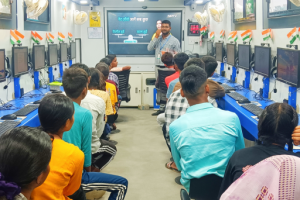
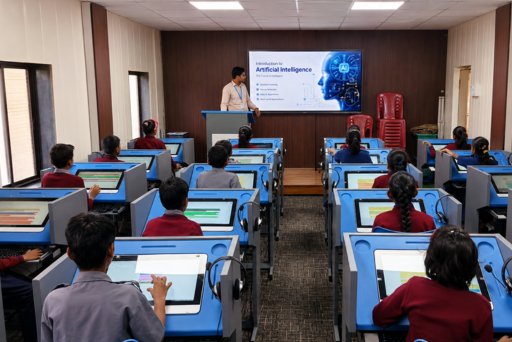
At NIIT Foundation, this philosophy is reflected across its employability and digital skilling initiatives. By combining industry-relevant technical training with a strong focus on communication, critical thinking, collaboration, and career readiness, NIIT Foundation equips learners with the skills needed to succeed in an AI-enabled world.
The future of work will not be defined by AI alone. It will be shaped by people who know how to use technology while bringing empathy, creativity, critical thinking, and sound judgment to everything they do. Building these capabilities today will be essential to creating a workforce that is future-ready, resilient, and inclusive.