Education has long been seen as a pathway to employment. Students work towards earning qualifications, securing stable jobs, and building successful careers. While these goals remain important, today, learning is no longer just about acquiring knowledge—it is about developing the confidence to solve problems, think creatively, and create opportunities.
Across India, educational institutions and skilling organisations are increasingly encouraging learners to think beyond textbooks. Entrepreneurship, digital skills, and problem-solving are becoming an integral part of the learning experience. These capabilities not only improve employability but also empower young people to identify opportunities, address real-world challenges, and build sustainable livelihoods.
This shift is significant as automation, artificial intelligence, and digital technologies continue to reshape industries. While technical skills remain essential, employers are increasingly looking for people who can adapt to change, collaborate with others, think critically, and innovate. These are also the qualities that enable individuals to become entrepreneurs and changemakers.
Learning to Innovate, Creating to Lead
Entrepreneurship often begins with identifying an everyday problem and finding a practical solution.
Imagine a college student who notices that many small shop owners in her town struggle to maintain digital records of their daily sales. As part of an entrepreneurship program, she collaborates with classmates to develop a simple, low-cost bookkeeping application in regional languages. What begins as a classroom assignment gradually becomes a solution adopted by local businesses, creating opportunities for software developers, trainers, and customer support professionals.
Similarly, consider a young engineering graduate who observes that farmers in his district frequently waste water because of inefficient irrigation practices. Working with mentors at a university innovation center, he develops an affordable smart irrigation device that monitors soil moisture and optimises water usage. As the idea grows, it creates employment opportunities in manufacturing, installation, and maintenance while addressing an important community challenge.
These examples may be hypothetical, but they reflect an important shift. Innovation is no longer limited to research laboratories or technology companies. It is becoming a mindset that learners can develop through practical experiences, collaboration, and problem-solving.
Entrepreneurship Can Be Learned
Entrepreneurship is often seen as an innate talent, but many of the skills behind successful businesses can be developed. Communication, financial planning, digital literacy, teamwork, leadership, and resilience are all skills that can be nurtured through structured learning and real-world experiences.
Across India, schools, higher education institutions, government initiatives, and skilling organisations are creating opportunities for young people to build these capabilities. Hands-on projects, internships, innovation challenges, mentoring, and incubation support help learners understand market needs, refine their ideas, and gain the confidence to take initiative.
Even for those who choose traditional careers, entrepreneurial thinking offers significant advantages. Employees who can solve problems, identify opportunities, and think creatively often make stronger contributions to their organisations and adapt more successfully to changing workplaces.
Preparing Young People For More Than Jobs
As industries continue to evolve, preparing young people for employment alone is no longer enough. They also need the confidence to identify opportunities, create value, and adapt to changing economic realities.
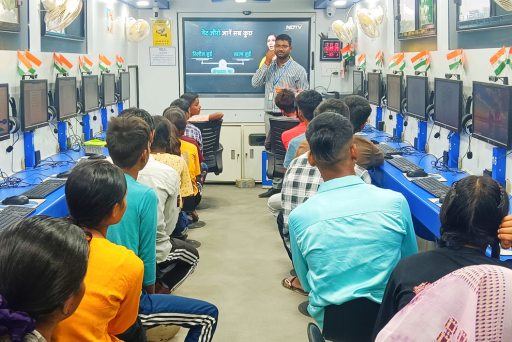
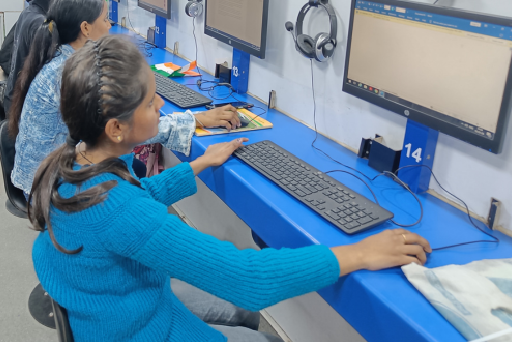
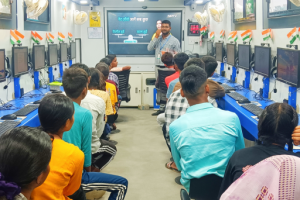
At NIIT Foundation, this philosophy is reflected in its approach to skill development and employability. Alongside technical training, NIIT Foundation focuses on building workplace readiness, digital skills, communication, problem-solving, and confidence—capabilities that enable learners to succeed whether they pursue employment, entrepreneurship, or further education.
Not every learner will start a business, but every learner can develop an entrepreneurial mindset. The ability to identify problems, take initiative, collaborate with others, and create practical solutions will remain valuable regardless of career choice.
As India moves towards a knowledge-driven and innovation-led economy, these capabilities will play an increasingly important role in shaping the future workforce. By combining technical expertise with creativity, resilience, and an entrepreneurial mindset, young people can become not only job seekers but also job creators who generate opportunities for themselves and for others.